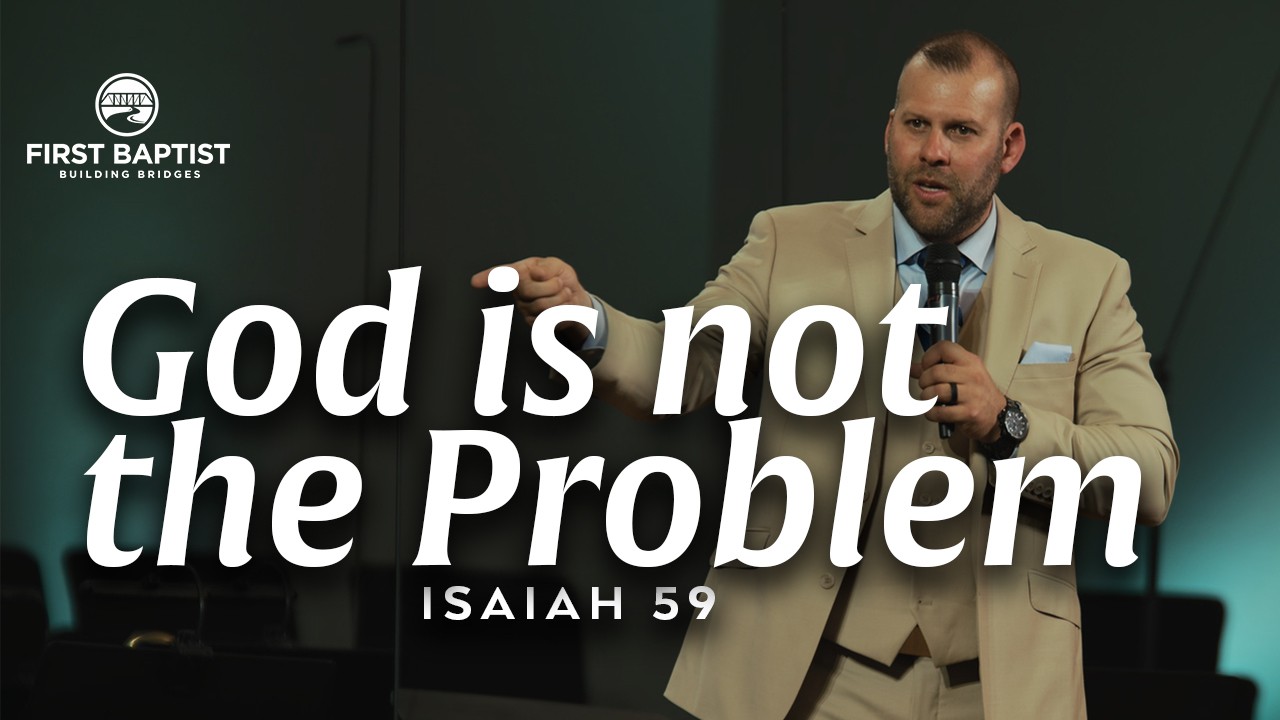

There are times in the Christian life when God can feel distant. We pray, and it seems like heaven is silent. We look for answers, but the situation does not change. In those moments, it is easy to begin questioning God. Has He stopped listening? Has He lost His power? Has He withdrawn His hand from helping us? But Isaiah 59 confronts that thinking head-on and reveals a truth that is both sobering and necessary. God is not the problem.
The Bible says, “Behold, the LORD’S hand is not shortened, that it cannot save; neither his ear heavy, that it cannot hear” (Isaiah 59:1). The issue is not with God’s ability or His willingness. The issue lies much closer to home. Verse 2 makes it plain: “But your iniquities have separated between you and your God, and your sins have hid his face from you, that he will not hear.” When there is distance between us and God, it is not because He has moved. It is because something has come between us and Him. And that something is sin.
1. The Great Separator
Isaiah begins by exposing the real problem. Sin is the great separator. It is not a small issue or a minor inconvenience. It is a dividing force that breaks fellowship with God and disrupts every relationship it touches. The prophet lists specific sins such as violence, lying, corrupt speech, injustice, and sinful thoughts. These are not isolated actions but evidence of a heart that has turned away from God.
It is easy to look at this list and think of extreme cases, but Jesus made it clear that sin runs deeper than outward actions. Hatred in the heart, deceit in the lips, and pride in the spirit all contribute to this separation. Sin is not just what we do. It is who we are apart from God. And every time sin is present, it creates distance. It separates husbands and wives, parents and children, church members from one another, and most importantly, it separates us from God.
The danger is that we often blame God when the separation is actually caused by our own sin. Like the children of Israel, we may ask why God seems silent while ignoring the sin that has disrupted our fellowship with Him. But the truth remains. Sin always separates, and it always brings destruction.
2. The Greater Confession
While the problem is serious, Isaiah does not leave us without hope. In verse 12, the tone of the passage changes. Instead of blaming God, the people begin to confess: “For our transgressions are multiplied before thee, and our sins testify against us… and as for our iniquities, we know them.” This is the turning point. True confession begins when we stop pointing outward and start looking inward.
Confession is not a vague acknowledgment that we are imperfect. It is a clear agreement with God about our sin. It is saying what God says about it. It is recognizing that our sin is against Him, that it condemns us, and we cannot fix it ourselves. Sin is not something we can outrun or hide from. It follows us, testifies against us, and remains until it is dealt with in God’s way.
The Bible gives us that way in 1 John 1:9: “If we confess our sins, he is faithful and just to forgive us our sins, and to cleanse us from all unrighteousness.” Confession must be followed by forsaking. We cannot hold on to sin and expect restoration at the same time. God is not looking for excuses, comparisons, or partial efforts. He is looking for genuine repentance. When we come honestly before Him, acknowledging our sin and turning from it, He responds with mercy and cleansing.
3. The Greatest God
The beauty of Isaiah 59 is that it does not end with separation or even confession. It ends with salvation. When God sees the problem and hears the confession, He steps in with a solution that only He can provide. Verse 16 tells us that there was no man to intercede, so God Himself brought salvation.
This points directly to Jesus Christ, the Redeemer spoken of in verse 20. The same God who is high above us reaches down to restore us. We could never bridge the gap caused by sin, but God did through His Son. The chapter begins with separation, but it ends with redemption.
And this truth is reinforced in Romans 8, where we are reminded that nothing can separate us from the love of God, which is in Christ Jesus our Lord. Sin can break fellowship, but it cannot cancel God’s love. When we come to Him in repentance, His grace restores what sin has damaged. What once seemed like an overwhelming problem becomes a temporary one in the hands of a powerful God.
God is not the problem. He is the solution. He is the One who saves, cleanses, restores, and sustains. When we humble ourselves before Him, confess our sin, and turn back to Him, He responds with grace that is greater than all our sin.
Reflection Question
Is there anything in your life right now that has come between you and God? Will you stop looking outward and honestly ask Him to reveal what needs to be confessed and forsaken today?