
Hebrews 11 is often called the Hall of Faith because it highlights men and women who chose to trust God when doing so was difficult. As we walk through this chapter, we are reminded that faith is not merely believing God exists. Faith is choosing God's way over our own, even when His way appears harder in the moment. Hebrews 11:6 reminds us that “without faith it is impossible to please him,” and the life of Moses provides one of the clearest examples of what that kind of faith looks like.
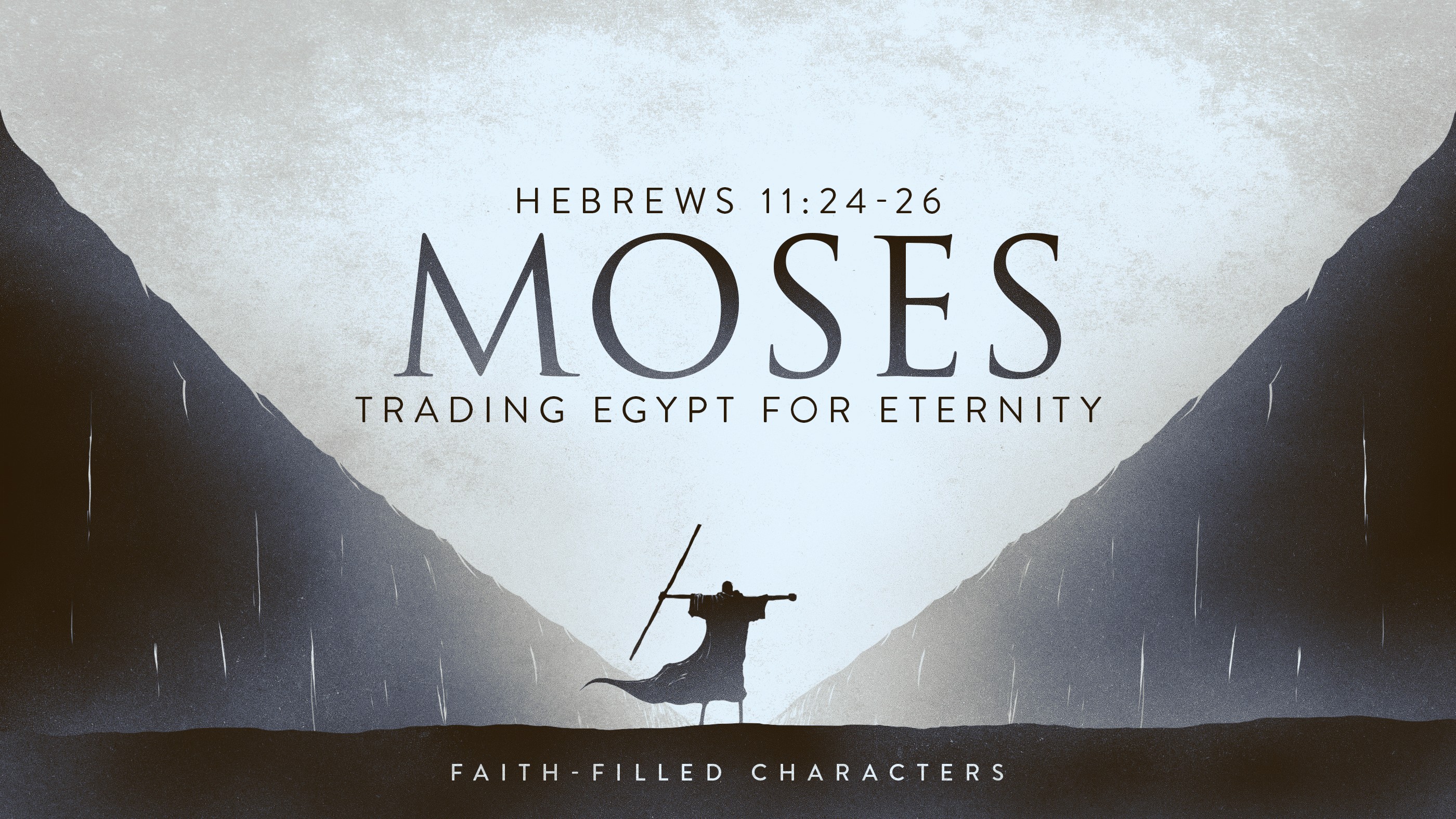
Moses stood at a crossroads that few people will ever experience. Raised in Pharaoh’s palace, he possessed power, influence, wealth, education, security, and prestige. Yet when the time came to choose between the comforts of Egypt and the calling of God, Moses made a remarkable decision. By faith, he traded Egypt for eternity. He looked beyond the immediate rewards of this world and chose what would matter forever.
The lesson of Moses’ life is simple but powerful: true faith sacrifices present pleasures for future gain. Faith looks beyond what is visible today and chooses what will honor God tomorrow.
1. Faith Refuses the Wrong Identity
The Bible says, “By faith Moses, when he was come to years, refused to be called the son of Pharaoh's daughter” (Hebrews 11:24). Moses' walk of faith began with a refusal. Before he could choose God's path, he had to reject an identity that conflicted with God's purpose for his life.
Humanly speaking, Moses had every reason to embrace his position in Egypt. As the son of Pharaoh’s daughter, he enjoyed privileges that most people could only dream about. He had access to wealth, power, education, and influence. Yet Moses understood that Egypt represented a pagan culture that opposed the true God. Though he lived in the palace, he knew that his ultimate identity was not found there.
Many believers face similar decisions today. Sometimes the world offers titles, positions, relationships, or opportunities that seem attractive on the surface but require compromise. A promotion may promise financial security while pulling us away from God's priorities. A relationship may offer companionship while drawing us away from biblical truth. Friendships may offer acceptance while encouraging disobedience. Faith sometimes requires us to say no to things that everyone else says yes to.
The greatest acts of courage are often not dramatic actions but simple refusals. Moses refused an identity that contradicted God's calling. As believers, we must remember that our identity is found first and foremost in Christ. No title, position, relationship, or achievement should ever take precedence over being a child of God.
2. Faith Chooses God's People Over Sin's Pleasure
Hebrews 11:25 says Moses was “Choosing rather to suffer affliction with the people of God, than to enjoy the pleasures of sin for a season.” Moses did not stumble into hardship. He chose it. He willingly exchanged comfort for affliction because he understood a truth that many people overlook: the pleasures of sin are temporary.
Notice that the Bible does not deny that sin can be pleasurable. In fact, Scripture openly acknowledges that sin brings pleasure. If sin were not appealing, temptation would have little power. The problem is not that sin offers pleasure. The problem is that it only offers pleasure “for a season.” Its satisfaction is temporary, while its consequences often last much longer.
Moses looked at the luxury of Egypt and understood that it would not last forever. The comforts, recognition, and opportunities before him were real, but they were temporary. He refused to sacrifice eternal rewards for temporary gratification.
This principle applies to every area of life. We are constantly tempted to choose what feels good now over what is right. Whether it is sinful habits, worldly priorities, bitterness, materialism, or compromise, Satan continually offers immediate pleasure while hiding the long-term cost. Faith, however, sees beyond the moment. Faith refuses to sacrifice the permanent on the altar of the immediate.
The choices we make today shape the rewards we experience tomorrow. Moses chose temporary hardship because he knew God's promises were worth more than Egypt's pleasures.
3. Faith Values Christ Above Everything Else
Hebrews 11:26 explains the reason behind Moses’ decision:
“Esteeming the reproach of Christ greater riches than the treasures in Egypt: for he had respect unto the recompence of the reward.”
Moses evaluated both options before him. On one side stood the treasures of Egypt. On the other side stood obedience to God. By faith, he concluded that Christ was worth more.
This is where faith changes the way we count value. The world measures success through wealth, comfort, popularity, influence, and possessions. Faith uses a different standard. Faith recognizes that obedience to God is greater than earthly success. Faith understands that spiritual riches outweigh material treasures.
Moses essentially applied God's mathematics to life. He looked at everything Egypt offered and compared it to God's reward. His conclusion was clear: Christ was greater.
The world still tells us to accumulate as much as possible, seek comfort, pursue recognition, and build earthly treasure. Yet Jesus taught us to lay up treasures in heaven. The world celebrates power, but Christ blesses humility. The world promotes self-preservation, but Christ calls us to surrender our lives to Him.
Faith does not merely change our choices. Faith changes our values. When we truly see Christ for who He is, we realize that no earthly treasure can compare to Him. Comfort, success, wealth, and recognition may all have value, but none of them are greater than knowing and obeying Jesus Christ.
Living by Faith Today
Moses’ decision was not easy, but history proves it was right. No believer reads Hebrews 11 and concludes that Moses made a mistake. We admire him because he saw beyond the temporary and invested in eternity.
Every believer faces similar choices. We may not be deciding between a palace and slavery, but we are constantly deciding between immediate gratification and eternal reward. We choose between popularity and obedience. Between comfort and faithfulness. Between what the world values and what God values.
Faith calls us to look beyond today's pleasures and focus on tomorrow's reward. It calls us to refuse identities that conflict with God's purpose, choose obedience over temporary pleasure, and value Christ above everything else.
The rewards of this world are temporary. The rewards of God are eternal.
Reflection Question:What are you being tempted to choose today that offers temporary pleasure but could cost eternal reward? Like Moses, will you choose by faith to trade Egypt for eternity?