
Life is filled with moments where decisions must be made, paths must be chosen, and direction must be set. In those moments, every believer feels a pull in two different directions. One direction urges us to trust what we can see, calculate what makes sense, and move forward only when the outcome feels safe. The other direction calls us to trust God, obey His Word, and move forward even when the details are unclear. That inner pull is what can be described as the tension.
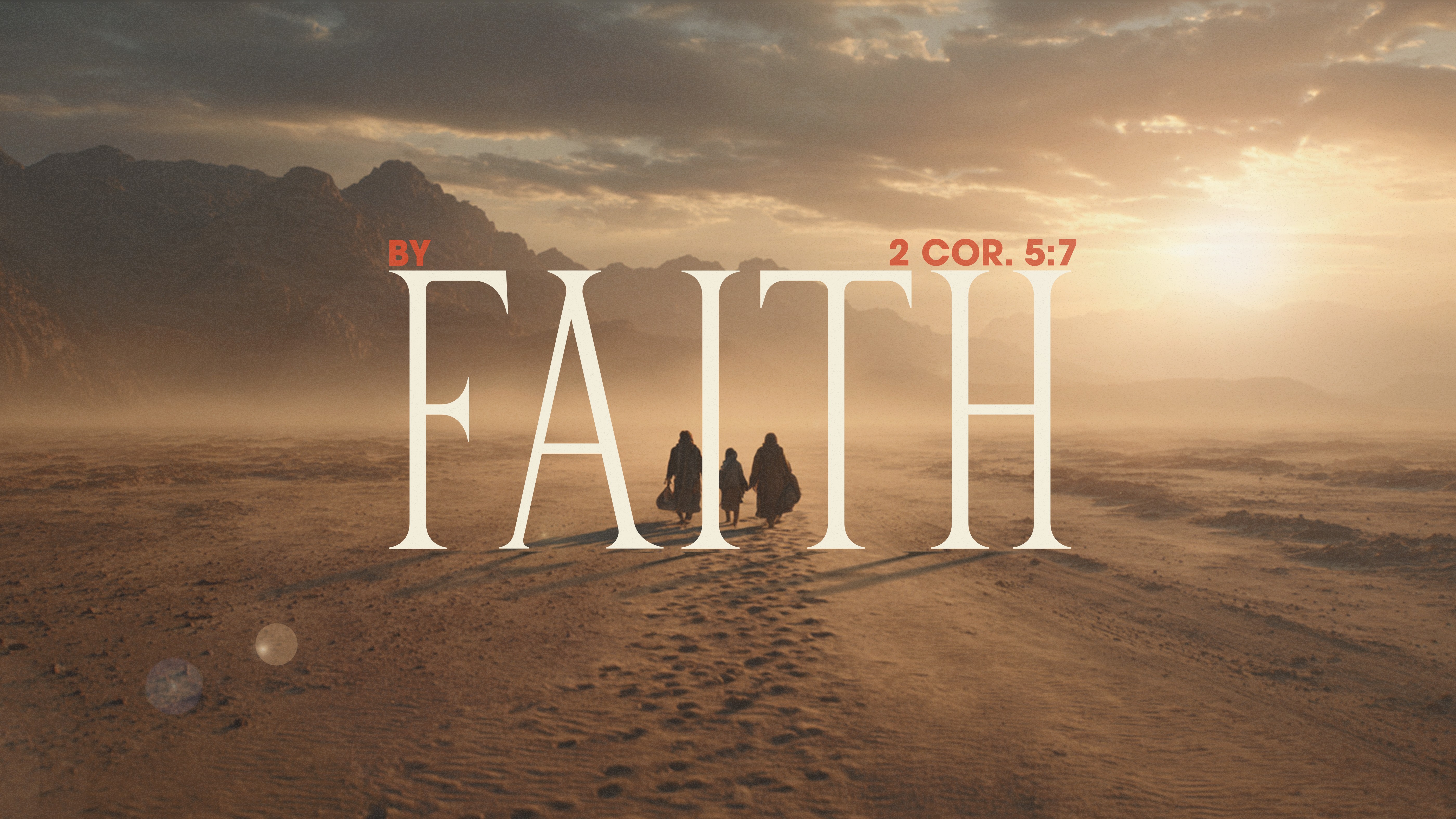
Second Corinthians 5:7 places this tension front and center: “For we walk by faith, not by sight.” This verse is simple, but it is not easy. Paul is not dismissing wisdom, facts, or careful thought. Rather, he is declaring what must govern the Christian life. Faith, not sight, is meant to be the deciding voice. The believer does not deny reality, but refuses to let visible circumstances determine obedience. Faith asks, “What did God say?” while sight asks, “How will this work out?” Every day, believers must choose which voice will lead.
Throughout Scripture, faith is not primarily defined but displayed. From Abraham leaving his home without knowing his destination, to Noah building an ark before rain ever fell, faith rests on the Word of God. At the same time, Scripture also shows negative examples, such as Israel at Kadesh Barnea, where fear and sight overruled faith and led to long-term consequences. These accounts remind us that walking by faith is not optional for a fruitful Christian life. It is essential.
1. Sight Allows Circumstances to Preach to Us
When believers walk by sight, circumstances begin to act like preachers. Every situation starts sending a message. Bills preach anxiety. Delays preach doubt. Silence preaches abandonment. Prosperity in the lives of others can preach envy. When circumstances take the pulpit, they shape our thinking and influence our decisions.
The psalmist experienced this struggle in Psalm 73 when he admitted that his feet had almost slipped as he watched the prosperity of the wicked. What he saw distorted what he believed. It was not until he entered the sanctuary of God and returned to God’s truth that clarity came. Circumstances are constant preachers, but they are terrible theologians. They do not reveal God’s character, His faithfulness, or His promises. Scripture does.
Walking by faith requires choosing which voice will preach to us. God’s Word must have the final say, even when circumstances appear loud, convincing, and overwhelming.
2. Sight Allows Fear to Scare Us
Sight does not stop at preaching; it also produces fear. When circumstances dominate our thinking, fear naturally follows. Proverbs 29:25 warns, “The fear of man bringeth a snare: but whoso putteth his trust in the LORD shall be safe.” Fear asks questions filled with uncertainty. What if this fails? What if God does not come through? What if obedience costs too much?
Faith is not reckless, but it is courageous. The three Hebrew men standing before the fiery furnace saw real danger, yet they refused to let fear dictate their obedience. Sight would have told them to bow. Faith told them to stand. Their confidence was not in survival, but in God Himself. When faith led, fear lost its power.
Many believers struggle with anxiety because they are unintentionally walking by sight. Fear often disguises itself as wisdom, but fear is rooted in what we see, not in who God is. Faith trusts God even when fear insists on retreat.
3. Sight Allows Control to Manipulate Us
Another danger of walking by sight is the illusion of control. Sight convinces us that if we plan enough, manage carefully, and prepare backup options, we can control outcomes. Control feels responsible and even spiritual, but it subtly replaces trust with self-reliance.
Scripture confronts this mindset directly. “Trust in the LORD with all thine heart; and lean not unto thine own understanding. In all thy ways acknowledge him, and he shall direct thy paths” (Proverbs 3:5–6). Faith does not mean inactivity, but it does mean surrender. Faith obeys while releasing the outcome to God. Sight obeys only if it can maintain control.
The tension between faith and sight becomes clear here. We often want to trust God while still holding the reins. True faith steps out of the driver’s seat and allows God to lead, even when the road ahead is unfamiliar.
Walking by Faith in Everyday Life
One of the most challenging truths from this message is that faith is often tested more in small, everyday decisions than in major crises. When life feels manageable, it is easy to rely on sight. When situations feel impossible, faith feels more natural. Yet God calls His people to walk by faith at all times, not only when options run out.
Faith believes what cannot be seen and obeys what is known to be true. It listens to God’s Word instead of circumstances, trusts God instead of fear, and submits to God instead of control. The Christian life cannot be lived partially by faith and partially by sight. The two compete for authority, and only one can lead.
Reflection Question
Where in your life are you feeling the tension between faith and sight right now? What would change if you chose to listen to God’s Word instead of your circumstances and walked forward in faith?